 +
+
Termékek»Indoor Luminaires»Lineaarivalaisimet»
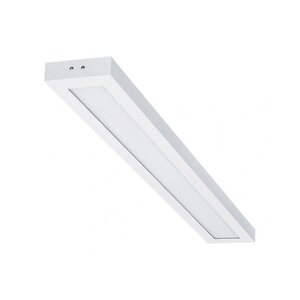
BARONI-SUN-12-DMPP-7k3-940-DALI
Kérj árajánlatot!

Full spectrum LED luminaires replicate the characteristics of natural daylight much more accurately than conventional LED luminaires. Their light spectrum contains a broad range of wavelengths, resulting in more natural-looking light, accurate colour reproduction, and lighting that can support human well-being and alertness.
The human eye perceives visible light within a wavelength range of approximately 380–780 nanometres. Each colour corresponds to a specific wavelength. Outside this range are ultraviolet and infrared radiation, which we cannot see but which can still have effects on the human body.
Natural daylight is the best example of full spectrum light. It contains a balanced combination of different wavelengths and acts as the primary regulator of the body's biological clock.
In full spectrum LED luminaires, the light spectrum is designed to resemble natural daylight as closely as possible. Technology uses a light spectrum in which blue and cyan wavelengths are present in a natural balance. This makes the lighting feel pleasant and natural.
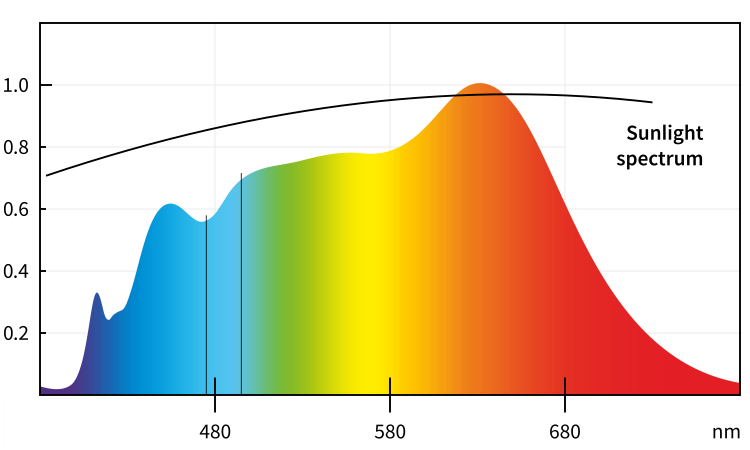
The spectrum of natural daylight.
Lighting affects more than just how well we see our surroundings. Light also plays a significant role in regulating the human circadian rhythm and hormonal activity.
Lighting that is sufficiently bright and resembles natural daylight can support the body's production of serotonin and cortisol. Serotonin influences alertness and mood, while cortisol helps maintain normal levels of activity during the day.
In the evening, the situation is reversed. A high proportion of blue light can interfere with melatonin production, which is why evening lighting should be warmer and contain less blue light.
For this reason, well-designed lighting can support both effective daytime performance and recovery in the evening.
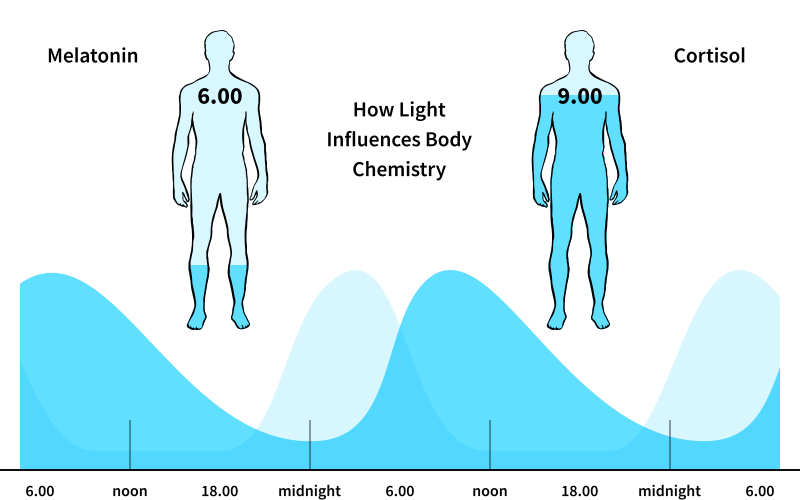
Circadian rhythm: During the day, bright full spectrum light supports alertness, while warmer lighting in the evening supports melatonin production.
The effects of full spectrum lighting have been investigated in several international studies. One study conducted in a hospital environment compared full spectrum lighting with conventional fluorescent lighting.
According to the results, full spectrum lighting was associated with:
Although individual experiences vary, the research findings indicate that lighting resembling natural daylight can support performance and well-being, particularly in environments that require precision and prolonged concentration.
CRI, or Colour Rendering Index, indicates how naturally a light source reproduces different colours. Sunlight serves as the reference, with a CRI value of 100. The closer a luminaire's CRI value is to 100, the more natural colours appear.
Full spectrum LED luminaires often have a colour rendering index of CRI 95 or higher, enabling highly accurate colour reproduction.
However, the CRI value alone does not provide a complete picture of a light source's colour rendering performance. The commonly stated CRI value is based on the average of eight test colours (R1–R8). It does not include, for example, R9, which indicates the rendering of saturated red, or R13, which is associated with the rendering of skin tones. A light source can therefore have a high CRI value even if there are differences in the way individual colours are reproduced.
High colour rendering is particularly beneficial in:
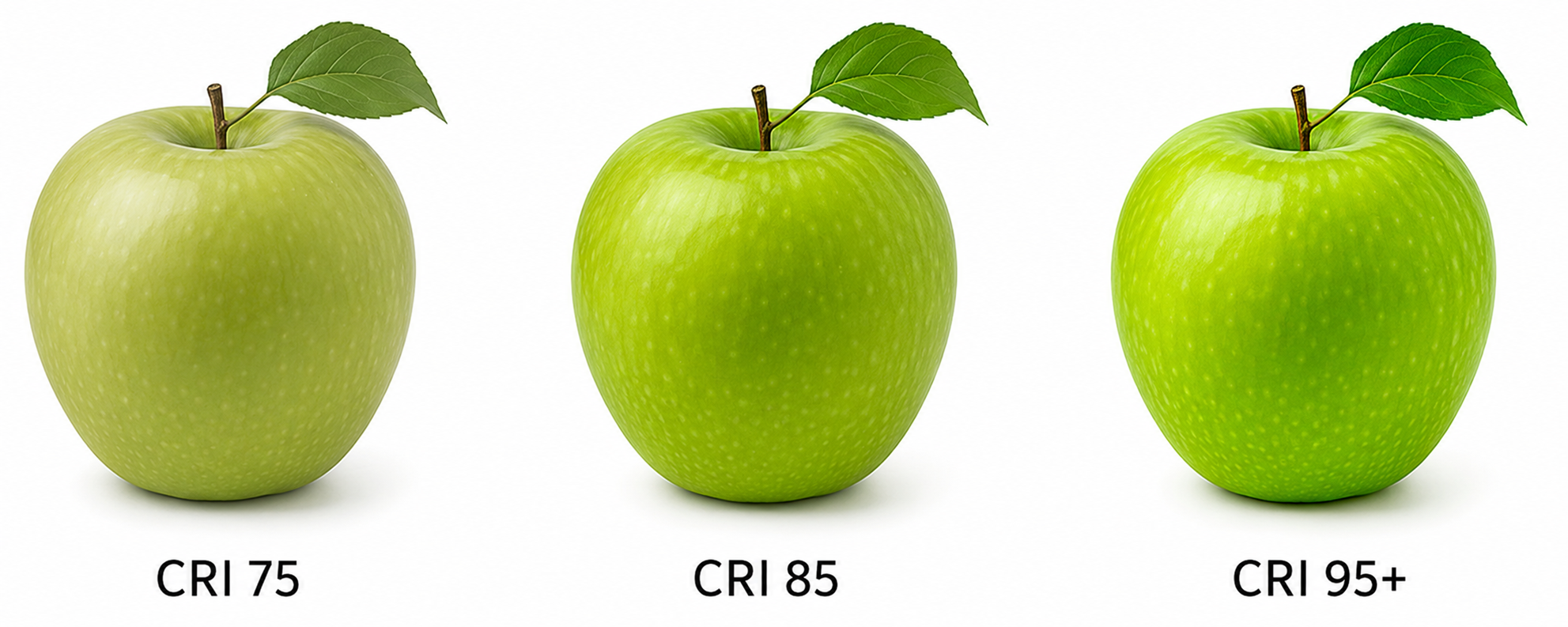
Illustration showing the same object at three different Colour Rendering Index levels: CRI 75, CRI 85 and CRI 95+.
Full spectrum lighting is suitable for almost all indoor environments, but it is particularly beneficial in spaces where people spend long periods of time or where the quality of lighting is especially important.
Typical applications include:
Full spectrum LED lighting can offer several advantages compared with conventional LED lighting.
Potential benefits include:
The extent of these benefits varies between individuals and also depends on the lighting design, duration of exposure and surrounding environment.
 +
+ +
+
Let's find the right lighting solution for your needs!
Contact us using our contact form, by email or by phone – our experts will be happy to help.
See our contact details on the Staff page.